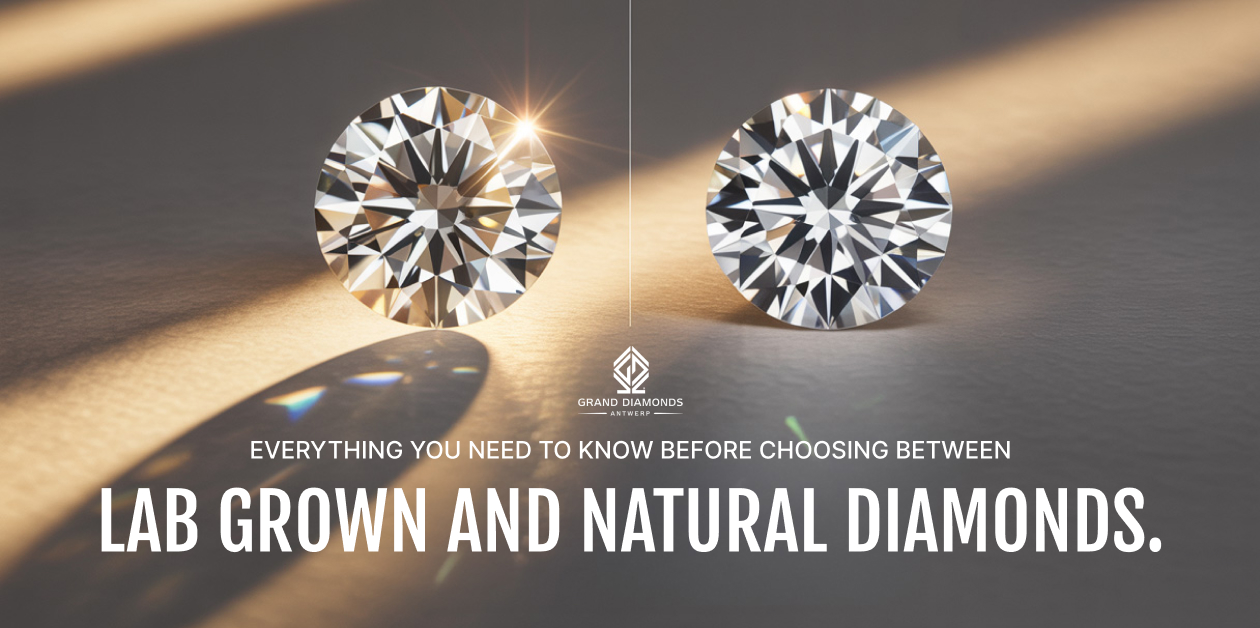
Choosing Between Lab-Grown and Natural Diamonds? Here’s What You Need to Know. Diamonds have long stood for love and tradition. But with lab-grown diamonds becoming more common, many buyers are now choosing between lab-grown and natural stones. Thanks to improved technology and a focus on sustainability, lab-grown diamonds are now a practical option for many.
Still, it’s natural to have questions. How do these two types compare in quality, value, and ethics? Here’s a simple breakdown to help you decide.
1. What’s the Basic Difference?
The main difference between lab-grown and natural diamonds lies in how they are formed and where they come from.
Natural diamonds are created naturally beneath the Earth’s surface. They form over millions of years under extreme heat and pressure. Volcanic activity brings them closer to the surface, where they are eventually mined.
Top Natural Diamond Jewelry
ROUND BRILLIANT CUT HALO DIAMOND EARRING STUDS
CUSHION CUT DIAMOND HALO ENGAGEMENT RING
Lab-grown diamonds, on the other hand, are made in laboratories. Scientists use advanced technology to recreate the same high-pressure, high-temperature conditions that exist underground. This process takes only a few weeks.
Top Lab-Grown Diamond Jewelry:

Emerald Cut Diamond Engagement Ring

Round Shape Bezel Set Diamond Pendant
Despite this difference in origin, both types of diamonds are made of carbon and have the same crystal structure. That means lab-grown and natural diamonds look the same, feel the same, and even have the same sparkle, hardness, and durability.
2. Can You Tell the Difference Between Them?
To the naked eye, it’s almost impossible to tell the difference between a lab-grown and a natural diamond.
Even experienced jewelers often need special tools or equipment, like spectrometers or microscopes, to detect subtle clues about how a diamond was formed.
Both lab-grown and natural diamonds can receive loose diamond certifications from trusted gem labs like GIA or IGI. They are graded based on the same standards—known as the 4 Cs (Cut, Clarity, Color, and Carat).
So, when it comes to how they look or shine, there’s no visible difference unless someone uses specialized testing. That’s why both are widely accepted in the jewelry market today.
3. Are Lab-Grown Diamonds Just as Good in Quality?

Round Shape Diamond Tennis Bracelet
Yes, lab-grown diamonds are just as high in quality as natural diamonds. The quality of any diamond—whether lab-grown or natural—is judged using the same standards, known as the 4 Cs:
- Cut: How well the diamond is shaped and polished
- Color: How colorless or tinted the diamond is
- Clarity: How free the diamond is from natural flaws or inclusions
- Carat weight: The size or weight of the diamond
If a lab diamond Antwerp is graded as excellent in all four categories, it will look just as stunning as a natural diamond with the same grade. There’s no compromise on brilliance or durability just because the diamond was made in a lab.
4. Common Misunderstandings About Lab-Grown Diamonds

Round Cut Classic Diamond Earring Studs
One of the biggest misconceptions is that lab-grown diamonds are fake. That’s not true.
Lab-grown diamonds are real diamonds. They are made from pure carbon and have the same structure, hardness, and sparkle as natural diamonds. They’re not the same as imitation stones like cubic zirconia or moissanite, which may look similar but are completely different in material and quality.
Another myth is that lab-grown diamonds are always more ethical. While it’s true they don’t require mining (which helps avoid land damage and labor issues), they are still made using large amounts of energy. Sometimes, this energy comes from non-renewable sources like coal or gas. So, it’s important to check the lab’s practices before assuming it’s the cleaner option.
5. Why Are Lab-Grown Diamonds Usually More Affordable?
Lab-grown diamonds are typically more budget-friendly because they:
- Take less time to create
- Are produced in controlled environments
- Don’t involve the physical challenges and costs of mining
- Have less material waste during cutting
In contrast, natural loose diamonds take millions of years to form and often need more labor to mine and cut. A large portion of the rough stone is lost during cutting, which increases the cost. Their rarity also adds to their higher price and perceived long-term value.
6. What About Resale and Long-Term Value?

Rose Gold Cushion-Shaped Illusion Set Round Brilliant Diamond Necklace
If investment or resale is important to you, natural diamonds may hold their value better over time—especially stones that are rare and come with trusted certifications.
Lab-grown diamond jewelry, on the other hand, is easier to produce, and its prices are going down as technology improves. This means they may not resell for as much as you paid for them.
However, if your goal is to buy a beautiful diamond for personal use, and you’re not worried about resale, then lab-grown diamonds are still a great option—especially for those on a budget.
7. Which Option is More Ethical or Eco-Friendly?
There isn’t a simple yes or no answer to this.
- Lab-grown diamonds skip the mining process, which reduces land disturbance and human risk. But the energy used to grow diamonds in a lab can be significant, especially if it’s not from renewable sources.
- Natural diamonds can also be ethical if they are sourced responsibly. Many mines today follow strict guidelines to protect the environment and support local communities through fair wages, healthcare, and education.
Always check the certifications and learn about how and where your diamond was sourced or created before making a final decision.
8. Are Lab-Grown Diamonds Just a Passing Trend?
Not at all. Lab-grown diamonds have become a reliable part of the fine diamond jewelry industry. More and more people are choosing them because they offer style, beauty, and affordability. They are especially popular among younger buyers who care about sustainability and want to get more value for their money.
That said, natural diamonds still hold strong emotional and traditional value. For many people, natural stones represent legacy, rarity, and history that can be passed down through generations.
Conclusion: Which Diamond is Right for You?
Both lab-grown and natural diamonds have their own unique benefits.
- Choose a lab-grown diamond if you’re looking for a beautiful, modern, and more affordable option.
- Go for a natural diamond if tradition, long-term value, and rarity are important to you.
At the end of the day, the right choice depends on your values, preferences, and budget. Whether it’s formed by nature or crafted by science, the diamond you choose should reflect your story and what matters most to you.
Discover certified brilliance at Grand Diamonds.

Looking for stunning lab diamond jewelry in Antwerp? Grand Diamonds is a reputable Antwerp jeweler known for offering a beautiful collection of lab-grown diamond rings, earrings, pendants, and more.
When you shop at Grand Diamonds, you don’t just get jewelry—you get long-term value and trust. Here are some amazing perks you’ll enjoy:
- Lifetime Warranty
- Free Shipping
- Hassle-Free Returns
- Free Engraving
- 60-Day Free Resizing
- Lifetime Upgrade – Any loose diamond bought from Grand Diamonds can be upgraded anytime! You’ll receive 100% credit toward a replacement diamond that’s at least double the value. Just keep the original diamond in good condition along with the grading certificate.
And that’s not all!
Trusted Shopping – Grand Diamonds has earned a Certificate of Excellence on TripAdvisor with a 5/5 rating from 319 reviews, proving their strong reputation and customer satisfaction.
Discover the brilliance of lab diamond jewelry in Antwerp—only at Grand Diamonds.
Want to learn more about lab-grown and natural diamonds? Reach out to Grand Diamonds—our experts are here to help you find the perfect diamond piece.
FAQ’s
Where can I buy diamonds in Antwerp?
Antwerp is known as the diamond capital of the world. You can find many trusted diamond dealers and jewelry stores in the Antwerp Diamond District, especially near Hoveniersstraat. Look for shops that offer certified diamonds and allow you to compare quality and price before buying.
Where can I buy lab-grown diamonds in Antwerp?
Many modern jewelry stores in Antwerp now offer lab-grown diamonds. Look for jewelers who clearly mention “lab-grown” or “man-made” diamonds. Ask for a certification from a trusted lab like GIA or IGI to confirm quality. You can also find lab-grown diamonds through online Antwerp-based retailers that offer transparent pricing.
What are lab-grown diamonds?
Lab-grown diamonds are real diamonds created in a laboratory using advanced technology that replicates natural diamond formation. They have the same sparkle, hardness, and chemical makeup as natural diamonds—just a different origin.
Can a jeweler tell if a diamond is lab-created?
Not by just looking at it. Lab-grown and natural diamonds look exactly the same to the naked eye and even under a jeweler’s loupe. To tell them apart, professionals need special equipment or a lab certificate. Always ask for certification when buying.
Is VS1 or VS2 better?
Both VS1 (Very Slightly Included 1) and VS2 (Very Slightly Included 2) diamonds have tiny flaws that are hard to see, even under magnification.
- VS1 has fewer or smaller inclusions than VS2, so it’s slightly better in clarity.
- However, both are excellent choices and look clean to the naked eye.
If budget is a factor, VS2 can offer good value without compromising beauty.
How can I test if a diamond is real?
There are a few ways to check:
- Fog Test: Breathe on the diamond. If it clears up quickly, it’s likely real.
- Water Test: Drop the diamond in water. Real diamonds sink due to their high density.
- Check the Sparkle: Real diamonds reflect both white and rainbow light sharply.
- Get a Professional Check: The most reliable way is to take it to a jeweler or get a lab certificate from GIA, IGI, or another trusted lab.
Ready to choose your perfect diamond? Contact Grand Diamonds today or visit our showroom in Antwerp for expert advice and unmatched service.