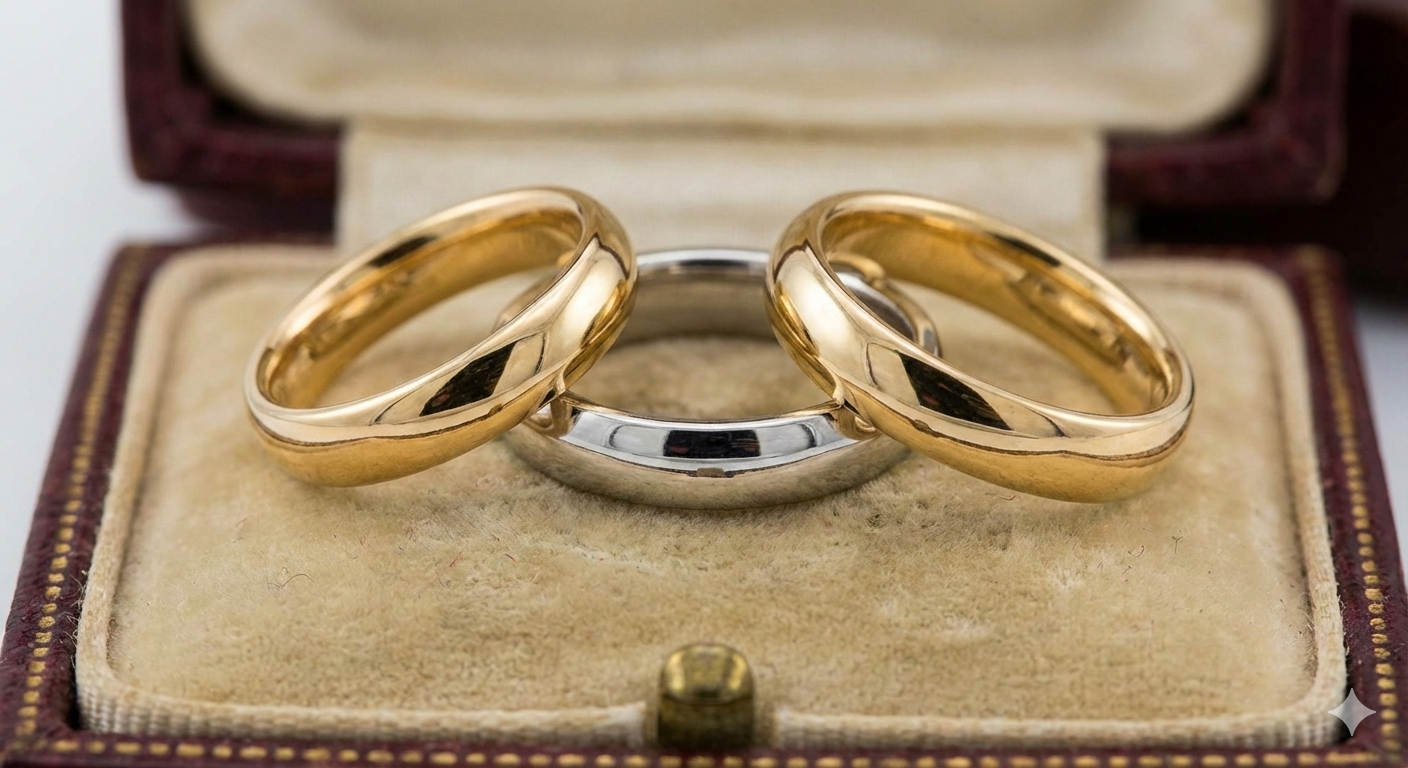
“Will this ring still look beautiful 10 or 20 years from now?”
It’s a question almost every couple asks—sometimes out loud, often silently.
Imagine this.
Sophie and Matteo are sitting in a small café near Antwerp Central Station. Their wedding is six months away. The table is scattered with coffee cups, a phone showing ring photos, and that quiet, heavy excitement that comes before a lifelong decision. Sophie scrolls through images of trendy wedding rings—bold shapes, mixed metals, dramatic designs. Matteo watches her expression change.
“They’re beautiful,” she says softly, “but… what if we regret it later?”
That pause—that hesitation—is where most couples find themselves.
A wedding ring isn’t like a dress or a watch. It doesn’t live in a drawer waiting for the right occasion. It becomes part of your hand, your daily life, your identity. It will be there during first homes, career changes, arguments, reconciliations, celebrations, and quiet mornings decades from now.
And that’s why the fear is real.
Will this ring still feel like us when we’re 50?
Will it age gracefully—or will it remind us of a phase we outgrew?
Are we choosing something timeless… or just something popular right now?
If you’ve felt this confusion, you’re not alone. And the answer, surprisingly, isn’t about trends, price, or even diamonds.
It’s about classic wedding rings—and why they never lose their beauty.
Why are classic wedding rings considered timeless?
Classic wedding rings are considered timeless because they focus on enduring design principles rather than temporary fashion trends. Their beauty comes from simplicity, balanced proportions, high-quality materials, and expert craftsmanship—elements that remain visually appealing across generations. Unlike trend-driven rings that reflect a specific era, classic wedding rings are designed to complement the wearer’s hand naturally and age gracefully over time. They prioritize comfort, durability, and emotional significance, making them suitable for daily wear and long-term use. Because their design isn’t tied to changing styles, classic wedding rings continue to feel relevant, elegant, and meaningful even decades after the wedding day.
What Makes a Wedding Ring Truly Classic
When people hear the word classic, they often think it means “plain” or “boring.” In reality, classic design is anything but simple-minded—it’s deeply intentional.
A truly classic wedding ring is not created to impress for a season. It’s created to belong to a lifetime.
Simplicity That Feels Effortless
Classic rings don’t shout. They don’t compete for attention. Instead, they feel calm, balanced, and confident. This simplicity allows the ring to adapt to your life—your changing style, your aging hands, your evolving story.
Designs that are overly complex tend to lock a ring into a specific time period. Simpler designs remain open-ended. They leave room for meaning to grow.
Perfect Proportions
One of the least discussed but most important aspects of timeless rings is proportion. A classic wedding band sits naturally on the finger. It doesn’t feel too wide, too narrow, too heavy, or too fragile.
European jewelers—especially those in Antwerp—have long understood this. A ring should feel like an extension of the hand, not an accessory sitting on top of it.
Craftsmanship Over Decoration
Classic rings rely on craftsmanship rather than embellishment. Clean edges, smooth finishes, precise settings—these details don’t fade with time. In fact, they become more beautiful as the ring develops a soft patina through years of wear.
This is why heirloom rings, passed down through generations, often feel more powerful than modern designs. Their beauty isn’t loud—it’s earned.
Material Integrity
Gold that holds its warmth. Platinum that retains its strength. Diamonds are chosen for balance rather than excess.
Classic rings respect materials. They don’t fight them. And when materials are treated with respect, they reward the wearer with longevity.
Why Trend-Driven Wedding Rings Often Feel Outdated
There’s nothing wrong with trends. Trends are exciting. They reflect creativity, cultural moments, and innovation.
But trends are not built for permanence.
A wedding ring lives in a different category from fashion jewelry. It doesn’t belong to a season—it belongs to a lifetime.
Trend-driven rings often feel thrilling at first. Bold shapes, mixed metals, dramatic textures, unconventional settings. They photograph beautifully. They stand out on social media.
But here’s the quiet truth most jewelers won’t say out loud:
What feels “unique” today can feel “dated” tomorrow.
This doesn’t happen because the ring loses quality—it happens because the design becomes tied to a specific era. Just like clothing silhouettes or interior styles, jewelry trends reflect a moment in time.
When that moment passes, the ring becomes a reminder of when it was chosen rather than why it was chosen.
Classic rings, on the other hand, don’t belong to any one decade. They feel just as appropriate in black-and-white wedding photos from the 1950s as they do in modern minimalist ceremonies today.
And that’s the difference couples often feel—but can’t quite explain.
Common Fears Couples Have Before Choosing a Wedding Ring
Choosing a wedding ring isn’t just a financial decision. It’s emotional. And with emotion comes fear.
Let’s address the most common ones—honestly and calmly.
“What if this looks outdated in the future?”
This fear usually comes from exposure to trends. When you see hundreds of styles online, it’s easy to worry that your choice might age badly.
Classic rings solve this fear by design. They don’t rely on visual novelty. Their beauty is rooted in proportion, comfort, and restraint—qualities that don’t expire.
“Is this really worth the price long-term?”
A wedding ring is one of the few purchases you’ll wear almost every single day for decades. When viewed through that lens, value becomes less about price and more about longevity.
A well-crafted classic ring doesn’t need replacing, redesigning, or upgrading to stay relevant. Its value compounds emotionally over time.
“Will it be comfortable for daily wear?”
This is where classic design excels. Rounded interiors, balanced weight, smooth edges—these details are perfected through centuries of wear experience.
Many trendy designs prioritize appearance over comfort. Classic rings quietly prioritize both.
“Will my partner and family like it?”
This fear is more emotional than practical. Wedding rings often carry symbolic weight beyond the couple themselves.
Classic designs tend to feel universally respected. They rarely provoke strong negative reactions because they align with shared cultural ideas of commitment, elegance, and seriousness.
They don’t divide opinion—they bring reassurance.
Classic Wedding Ring Styles That Never Go Out of Fashion
Instead of listing styles like a catalogue, let’s talk about them the way couples experience them.


Shop Women’s Classic Wedding Rings
The Plain Gold Band
It’s the most understated choice—and often the most powerful.
A simple gold band doesn’t rely on decoration. Its beauty comes from the way it catches light, the warmth of the metal, and the quiet confidence it carries.
Many couples who initially overlook this style find themselves drawn back to it after seeing everything else.
The Slightly Rounded Band
This design feels softer, more organic. It ages beautifully, especially as the ring develops subtle signs of wear that add character rather than damage.
European couples often choose this style because it feels lived-in from the very beginning.
The Classic Diamond Band
Not flashy. Not crowded. Just a balanced line of diamonds that enhances the band rather than overpowering it.
When diamonds are used sparingly and thoughtfully, they don’t feel trendy—they feel eternal.
The Matte or Soft-Polished Finish
While high polish is timeless, soft finishes add quiet individuality without locking the ring into a trend.
These finishes age gracefully, blending small scratches into a cohesive story rather than visible damage.
Real-Life Perspective from European Couples or Jewelers


A master jeweler in Antwerp once said:
“A classic wedding ring doesn’t try to be remembered. It allows the marriage to be remembered.”
Many European couples share a similar philosophy. They view wedding rings not as statements, but as companions.
One couple from Brussels chose simple platinum bands after months of searching. Years later, they admitted they almost went for a bold, architectural design.
“We’re grateful we didn’t,” they said. “Our rings still feel like us—even though we’ve changed.”
This perspective is common among couples who value craftsmanship, heritage, and emotional longevity over visual trends.
How to Choose a Classic Wedding Ring Without Regret
Start by asking different questions—not what looks impressive, but what feels enduring.
How does the ring feel after wearing it for hours?
Does it suit your hand naturally?
Can you imagine wearing it during every version of your future self?
Focus on quality over decoration. Choose materials known for longevity. Trust designs that have survived decades—not months.
And most importantly, choose a ring that feels calm. Excitement fades. Calm confidence remains.
Conclusion
One day, years from now, you’ll look at your wedding ring differently.
It won’t remind you of trends or decisions or even the wedding day itself. It will remind you of time—shared mornings, hard conversations, quiet victories, and everything in between.
Classic wedding rings don’t stay beautiful because they resist time.
They stay beautiful because they move with it.
If you’re choosing a ring meant to witness your entire story, choose one that doesn’t need to change to stay meaningful.
And when you find it, you’ll know—not because it dazzles, but because it feels like it’s always belonged to you. 💍